Bareboat Rental or Skippered Charter: How to Decide Before You Book
A bareboat rental is the better choice only when the guest can manage the vessel and trip risk
A bareboat rental works only when the guest skipper has the experience, documents, local awareness, and risk tolerance to operate without paid crew.
- Experience: Choose bareboat only if the vessel matches the skipper’s real handling experience.
- Local conditions: Check tides, restricted areas, marina approaches, traffic, and wind patterns before comparing prices.
- Operator approval: Expect a boating resume, certificates, prior charter history, or checkout sail.
- Financial exposure: Ask how deposits, damage waivers, fuel, late return, and cleaning charges work. NauticEd notes that travel protection may cover unforeseen events or cancellations, but many yacht charter companies refer guests to outside insurance providers.
- Passenger needs: Review boarding, cabin steps, heads, and deck movement. For accessibility context, the 2010 ADA Standards use a 30 by 48 inch clear floor or ground space for wheelchair positioning.
A skippered charter is better when relaxation matters more than control
A skippered charter shifts navigation, docking, routing, and safety decisions to a paid professional. That suits guests who want the yacht rental experience without running the boat.
A bareboat rental is not the same decision as a luxury boat charter
A luxury boat charter describes comfort level, not responsibility level. High-end charter yacht rentals may be fully crewed, skippered, or bareboat. Before comparing photos, confirm whether licensing, passenger limits, and vessel size make bareboat use realistic.
Licensing, passenger limits, and vessel size rules decide whether a bareboat rental is legally realistic
The legal test depends on destination, vessel size, passenger count, and whether the guest truly operates without crew supplied as part of the charter. Verify competency rules, contract language, and thresholds before treating a listing as bookable.
What proof does a guest skipper need for a bareboat rental?
A guest skipper should ask which maritime authority applies and request the accepted document list before paying a deposit. A platform may accept an inquiry, but the local base can still reject handover.
- Boating resume: recent vessels handled, waters sailed, docking, anchoring, radio use, night experience, and tidal or coastal passages.
- Certificates or licenses: ask whether the destination accepts a home-state license, international certificate, sailing-school qualification, radio certificate, or company assessment.
- Visiting skipper rules: ask whether foreign visitors need document checks, translations, endorsements, or permits.
- Checkout requirement: confirm whether the base requires an on-water checkout, marina maneuver, chart briefing, or systems orientation.
Passenger and vessel size rules can change the charter category
Passenger count and vessel length can move a trip out of simple recreational territory. Thresholds vary by jurisdiction, vessel flag, waters used, and whether money changes hands for carriage.
A larger yacht rental may trigger different inspection, manning, safety equipment, or captain requirements than a smaller bareboat. A higher passenger count can also change the legal category, even when every guest is part of one private group.
A hired skipper can change both responsibility and compliance
The contract should say whether the skipper is optional, mandatory, required after a failed checkout, or arranged separately. That affects route control, weather calls, insurance responsibility, and what the guest must prove.
The real price comparison includes deposits, insurance, fuel, cleaning, skipper fees, and provisioning
A bareboat rental may look cheaper on the base rate, but final cost depends on deposits, damage waivers, fuel, marina fees, cleaning, linens, provisioning, and skipper charges for the same route, dates, vessel, and passenger count.
A side-by-side cost table should compare the same vessel, date, and itinerary
A fair yacht rental comparison starts with one shared scenario: same boat class, season, departure marina, nights aboard, route, and number of guests.
| Cost line | Bareboat rental quote should show | Skippered charter quote should show |
|---|---|---|
| Base rate | Boat-only price for exact dates | Boat price plus whether skipper is included |
| Deposit and damage | Refundable deposit, waiver, exclusions | Guest liability and insurance terms |
| Operating costs | Fuel, water, pump-out, moorings, berths | Fuel policy, docking fees, route extras |
| Comfort fees | Cleaning, linens, tender, Wi-Fi, toys | Cleaning, linens, crew meals, skipper cabin |
| Booking fees | Taxes, port fees, platform fees, late return | Taxes, port fees, gratuity, overtime |
NauticEd’s damage waiver explainer gives a sample invoice for a Catamaran 450 Lagoon in Split, Croatia: a $5,200 charter cost, $200 end cleaning, $100 outboard engine, $100 for four sheet and towel sets, $30 Wi-Fi, a $6,000 damage deposit, and a $400 damage waiver option tied to an $800 reduced exposure.
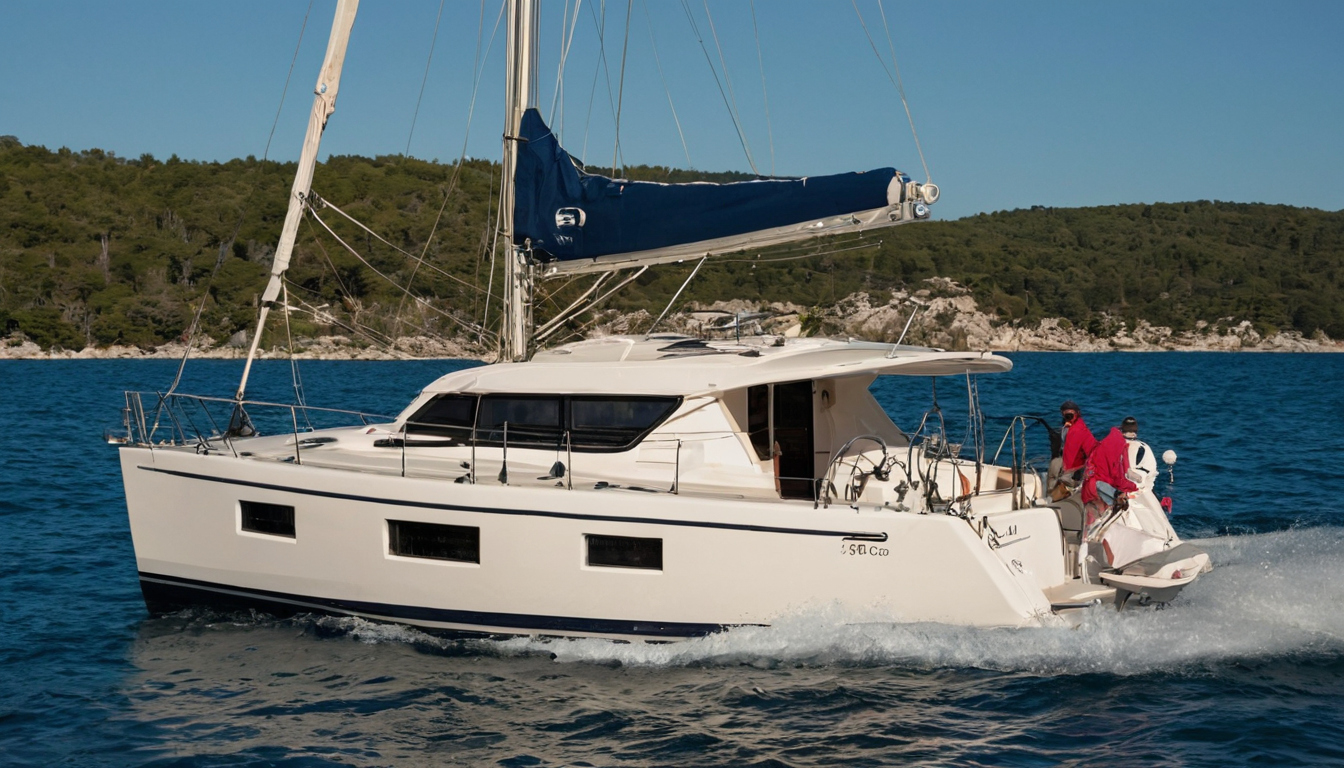
The real price comparison includes deposits, insurance, fuel, cleaning, skipper fees, and provisioning shown with practical context cues.
Security deposits are a major bareboat rental exposure
The refundable deposit can matter more than the daily rate if the charterer has limited credit, a shared group budget, or low tolerance for damage disputes. NauticEd describes bareboat damage deposits as commonly ranging from $2,000 to $8,000 depending on the boat.
NauticEd also describes the deposit as a credit-card authorization taken before departure rather than an upfront charge, unless damage occurs. Ask how the operator records pre-existing scratches, propeller condition, dinghy inventory, fuel level, and checkout photos, and when the hold is released.
A damage waiver can reduce the amount at risk if offered. Groups should agree before departure how any claim will be split.
Skipper fees can be worth comparing against the cost of mistakes
A skipper fee should be compared with the likely cost of avoidable errors, not just with the bareboat base rate. Docking damage, late return, grounding, propeller strikes, lost equipment, unsuitable anchorages, and poor fuel planning can erase the apparent saving.
The skipper line item should state the daily fee, tax, gratuity expectations, meals, and cabin needs.
Route planning and weather limits determine how much freedom a bareboat rental really gives you
A bareboat rental gives route freedom only inside the operator’s navigation area, weather rules, daylight limits, marina availability, and check-in schedule. Ambitious island routes, remote anchorages, tidal passages, and tight return times can quickly reduce that freedom.
The best bareboat itinerary includes a weather buffer
A workable bareboat itinerary should leave at least one flexible day on a multi-day trip, or a shorter fallback route on a day rental. Ask which cruising grounds are permitted, which areas are prohibited, and whether the vessel must return to the same marina by a fixed check-out time.
Weather limits should be treated as operating rules. Operators may restrict departure, require a lay day, or direct an early return when wind, sea state, visibility, storms, or local advisories make the planned passage unsuitable. In tidal areas, current windows, bridge openings, lock schedules, shallow-water access, and daylight docking policies may also shape the route.
Marina and mooring capacity can narrow the plan further. A popular overnight stop may require advance booking, and some anchorages are unsuitable in certain wind directions.
A skippered charter can make difficult local waters easier
A skippered charter can be smarter where the destination has tight marina berths, reef entries, shifting sandbars, heavy traffic, strong tide runs, or unfamiliar anchoring rules. Some operators limit bareboat guests to simpler routes while offering exposed passages or complex harbor approaches only with a skipper or guide.
Provisioning, safety briefings, and accessibility needs are easier to underestimate on a bareboat rental
A bareboat rental makes the guest responsible for food, water, luggage, medication, passenger comfort, safety briefings, and daily housekeeping. Families, older travelers, first-time boat guests, and mixed-ability groups should treat these details as booking criteria.
A bareboat passenger briefing should cover more than where the life jackets are
The acting skipper should brief passengers before leaving the berth. Cover life jacket fit, fire extinguishers, first aid kit, distress signals, VHF or phone contact plan, engine shutoff, fuel shutoff, bilge pump location, head use, handholds, swim ladder rules, and man-overboard actions.
Children, non-swimmers, nervous guests, and anyone with medication or mobility needs should be discussed before departure. On a bareboat, the guest skipper becomes both operator and host.
Provisioning mistakes affect comfort and schedule
Provisioning should match the vessel. Small charter boats often have limited refrigeration, compact storage, modest galley space, and finite fresh water. Ask whether suppliers deliver to the dock, where ice is sold, and whether fuel, water, garbage, and pump-out stops must be planned into the route.
Special diets, baby supplies, seasickness medication, pet policies, and cooler space should be settled before check-in.
Accessibility should be checked vessel by vessel
Accessibility cannot be assumed from the words “luxury boat charter.” Ask for current photos of the gangway, boarding height, cockpit steps, cabin stairs, berth access, and head layout. For reference, the 2010 ADA Standards set accessible dining and work surfaces at 28 to 34 inches above the finish floor or ground, but many private charter vessels were not designed around comparable clearances.
Before paying, confirm accessible parking, dock surface, restroom access at the marina, boarding assistance, mobility aid storage, and service animal policy.
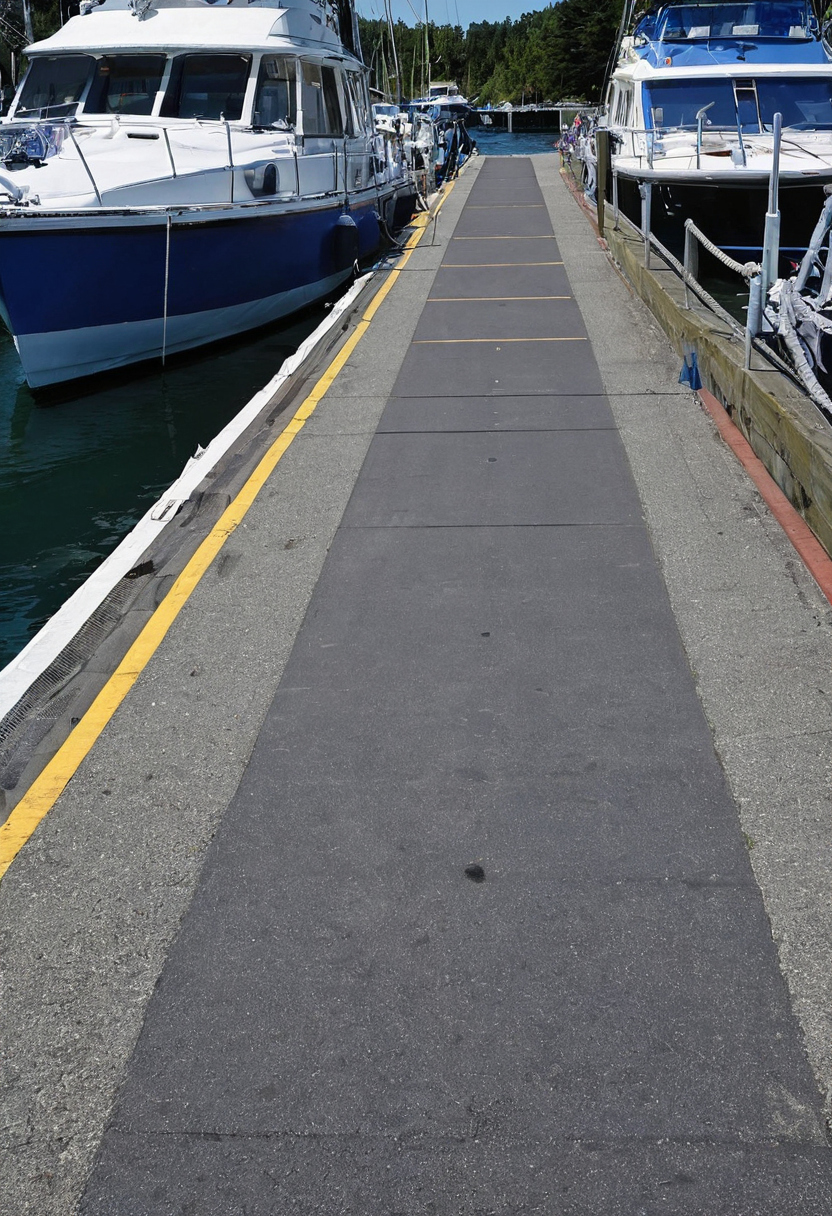
Provisioning, safety briefings, and accessibility needs are easier to underestimate on a bareboat rental shown as a mobility planning reference.
Cancellation terms and damage liability should be read before paying for any bareboat rental
The riskiest part of a bareboat rental is often the contract, not the sailing. Before payment, confirm cancellation deadlines, weather rescheduling rules, deposit forfeiture triggers, insurance exclusions, damage reporting duties, and late-return penalties for the exact vessel, destination, dates, and operator.
Weather cancellation policies are not the same as bad-weather preferences
Weather clauses usually separate unsafe operating conditions from disappointing conditions. Strong wind, poor visibility, port restrictions, or operator-declared no-sail conditions may trigger a postponement, credit, or reschedule, but clouds, light rain, cooler temperatures, or a less scenic route may not qualify for a refund.
The contract should state who makes the final weather decision. A bareboat rental may leave more judgment with the guest skipper after departure, while a skippered charter may give the hired captain or operator more authority to delay, shorten, or alter the route.
A pre-booking question list reduces surprises
- What cancellation deadline changes the refund percentage?
- Who decides whether weather is unsafe for departure?
- Is compensation a refund, credit, reschedule, or no remedy?
- What damage deposit is authorized, and when is it released?
- Which insurance exclusions apply to negligence, alcohol use, night operation, racing, towing, restricted areas, or skipper changes?
- What documents must the guest skipper submit before arrival?
A traveler who cannot get clear written answers should treat the booking as unfinished, even if the yacht rental looks available.

Cancellation terms and damage liability should be read before paying for any bareboat rental shown as an editorial planning reference.