Plan a New York Harbor Family Day Trip Using NYC Ferry Landings and Transfer Rules
A parent steering a stroller toward a slip sign can connect three New York Harbor waterfront stops only if the family follows the correct gangway and the current NYC Ferry schedule. Choose the wrong landing or misread the transfer clock, and a missed boat can erase the final attraction or leave the family facing a long wait.
Build the family day trip landing-first: confirm each access point, sailing, transfer path, and landside walk before adding playgrounds or lunch. Keep a two-stop version and a subway or bus fallback ready for the travel date.
Which NYC Ferry ticket and transfer rules apply to a family day trip?
Check NYC Ferry fares, activation rules, and the exact travel date before fixing a family route, because a ticket covers NYC Ferry service only and the transfer clock can expire while the family is ashore.
| Item | Planning rule |
|---|---|
| Base fare | The standard one-way NYC Ferry fare is $4.50. Confirm the posted fare before purchase. |
| Activation and validity | Activate an app ticket shortly before joining the boarding line. Follow the validity period displayed in the app. |
| Transfer | A free transfer between NYC Ferry routes remains valid for 120 minutes after the one-way trip starts. A return journey does not qualify as a free transfer. |
| Children | Children no taller than 44 inches may ride free with an adult, subject to the operator’s current accompanying-child limit. Crew may check a child against the height marker at the landing. |
| Bicycles | NYC Ferry permits bicycles without an additional charge, although vessel capacity still controls boarding. |
| Purchase | Buy tickets in the NYC Ferry app or from a ticket vending machine at a landing. Do not depend on an onboard purchase unless current guidance expressly allows one. |
| Expiration and refunds | Unused tickets expire 90 days after purchase. NYC Ferry tickets are non-refundable and non-transferable, and their expiration dates cannot be extended. |
An NYC Ferry transfer is valid only under the operator’s current ticket conditions
The NYC311 ferry guidance treats a transfer as the continuation of one one-way journey between NYC Ferry routes. The transfer does not cover a long attraction visit followed by a return ride.
- Activate at the correct landing. Early activation can start the validity clock before the family reaches the boat.
- Keep every rider’s ticket available. One adult can hold the phone or paper tickets while another handles the stroller and children.
- Confirm paper-transfer instructions. Ask crew what credential is required before leaving the first vessel.
- Budget for a missed connection. A delay does not make an expired ticket refundable, so keep enough money for another fare.
- Check the dated timetable. NYC Ferry generally operates daily from approximately 5 a.m. to 10 p.m., but route and seasonal schedules control the actual trip.
NYC Ferry tickets do not automatically cover every ferry in New York Harbor
Several ferry terminals sit in lower Manhattan, but nearby boats do not share one fare system. Use this risk screen before leading children toward a slip:
- Staten Island Ferry: NYC DOT operates this free service between Whitehall Terminal and St. George Terminal. The crossing takes approximately 25 minutes, and an NYC Ferry ticket has no role in the trip.
- Governors Island ferries: These ferries have separate operators, departure points, schedules, and ticket conditions.
- Statue of Liberty and Ellis Island boats: The authorized concession service uses separate timed tickets and departs from Battery Park rather than Wall Street/Pier 11.
- MTA subway and bus: MTA fares and transfers remain separate from NYC Ferry tickets.
Once the family has the correct fare system, the next decision is physical: choose the named landing that puts the gangway closest to the intended waterfront attraction.
Which NYC Ferry landings are closest to family-friendly waterfront attractions?
The safest family day trip starts with the printed landing name, not the neighborhood or attraction name. Match each gangway to its street access, route, family stop, restroom plan, walking surface, shelter, and current accessibility notice.
| Landing and official access | NYC Ferry service | Family stop and walk | Onshore checks |
|---|---|---|---|
| Long Island City, 46th Avenue and Center Boulevard, also listed as 47th Road | Astoria Route | Gantry Plaza State Park begins beside the waterfront. Playground areas and lawns require a longer walk south. | Mostly paved paths. Confirm park restroom hours, shelter options, and the step-free route on the travel date. |
| DUMBO/Fulton Ferry, Old Fulton Street and Furman Street | East River and South Brooklyn routes | Brooklyn Bridge Park is close to the gangway. Pier 1 lawns and play areas require a walk through the park. | Park paths are paved, but some neighborhood approaches contain cobblestones. Check restroom hours and construction notices. |
| Wall Street/Pier 11, Gouverneur Lane at South Street/FDR Drive | Astoria, East River, Rockaway, Soundview, and South Brooklyn routes | Use primarily as a transfer terminal rather than an attraction stop. | Expect open waterfront exposure. Identify the departure slip, restroom, and indoor fallback before arriving. |
| Red Hook, Ferris Street and Clinton Wharf | South Brooklyn Route | Atlantic Basin is nearby. Louis Valentino Jr. Park and Pier requires a longer landside walk. | Expect exposed stretches and mixed industrial sidewalks. Confirm restroom access and step-free routing. |
- Save the exact landing label in the NYC Ferry app.
- Measure from the gangway exit rather than the neighborhood center.
- Record separate walks to the attraction entrance, restroom, playground, and return queue.
- Reject a connection that depends on an elevator, gate, or indoor facility without a confirmed backup.
DUMBO/Fulton Ferry is a specific landing, not a general instruction to go to DUMBO
The NYC311 landing information places DUMBO at Old Fulton Street and Furman Street and identifies both East River and South Brooklyn service. Enter the complete landing label in the itinerary. “DUMBO” alone could send a family toward a subway exit several blocks from the gangway.
Brooklyn Bridge Park starts close to the landing, but a chosen playground, restroom, or indoor refuge may sit farther along the seawall. Inspect the step-free route for cobblestones, temporary fencing, steep grades, and seasonal closures.
Wall Street/Pier 11 requires a slip-to-slip plan when a transfer is involved
Wall Street/Pier 11 serves several NYC Ferry routes, but the route listing does not promise a fixed slip. Read the departure board after disembarking, locate the next gangway, and delay any restroom stop until an adult has confirmed the slip and remaining time.
With those landing choices fixed, the family can test whether a three-stop Long Island City, DUMBO, and Red Hook itinerary fits the dated schedule.
A three-stop NYC Ferry itinerary can connect Long Island City, DUMBO, and Red Hook
A workable travel itinerary connects the three stops only when the NYC Ferry timetable for the chosen Saturday supports every sailing and transfer. Cap the plan at three waterfront stops, record the exact departures from the current schedule, and keep a two-stop version ready.
The sample Saturday itinerary must be built backward from the last practical return
Start with the last useful Red Hook departure, not the first morning boat. The selected departure should leave enough time to reach the family’s hotel or train without depending on the final sailing of the day.
- Fix the dated Red Hook return. Write down its route, destination, departure time, and landside fallback. Work backward from the time the family must reach the Red Hook gangway.
- Place the Red Hook visit. Allow time for the waterfront attraction, restroom, food, and return walk. A short visit is better than a rushed gangway approach.
- Choose the DUMBO departure. Confirm the South Brooklyn direction serving Red Hook and check every intermediate stop against the gangway sign.
- Protect the DUMBO stop. Reserve at least 90 minutes for Brooklyn Bridge Park, food, restrooms, and the walk back to DUMBO/Fulton Ferry.
- Add Long Island City last. Begin near Gantry Plaza State Park and allow 60 to 90 minutes before boarding. Do not confuse the Long Island City landing with Hunters Point South.
NYC Ferry schedules change by season. A dated itinerary must use the operator’s current Saturday timetable rather than departure times saved from a previous trip.
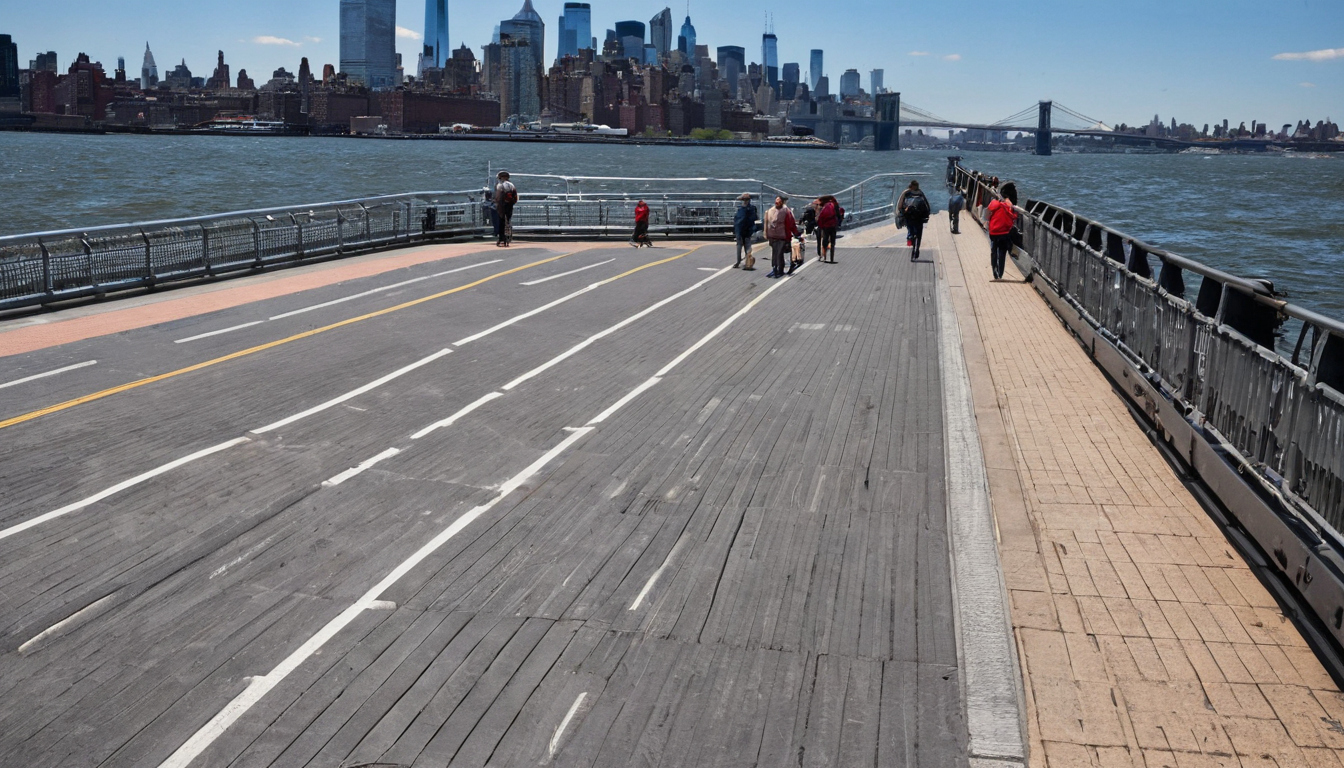
A three-stop NYC Ferry itinerary can connect Long Island City, DUMBO, and Red Hook shown as a destination-specific travel planning reference.
A two-stop NYC Ferry itinerary is safer for toddlers and short winter days
The safer version keeps Long Island City and DUMBO and drops Red Hook. Use a one-seat sailing only when the dated timetable confirms service from the correct landing. Give the main park enough time for play, food, and a restroom stop, then return before darkness or long off-peak gaps complicate boarding.
The family day trip budget must include every rider and separate transport fare
For two adults and two children, multiply the current NYC Ferry fare by every fare-paying rider and by each one-way journey not covered by a valid transfer. Price MTA fallback trips separately. Bicycles have no NYC Ferry surcharge under the current policy.
The Staten Island Ferry operates year-round and is free, but that separate service does not cover an NYC Ferry ride. Once the route and return budget are fixed, calculate the usable time between the arriving gangway and the next boat.
How much transfer and walking time should a family allow between NYC Ferry boats?
Families should treat NYC Ferry’s 120-minute transfer validity as a ticket rule, not sightseeing time. Calculate each connection from scheduled arrival to departure, then subtract unloading, the slip-to-slip walk, boarding readiness, and family delays.
A ferry transfer buffer begins after passengers clear the arriving gangway
Use this formula: usable buffer = scheduled interval minus unloading, slip walk, ready-at-gangway margin, and family allowance. Check the operating-day timetable, identify both slips, and measure the actual path rather than estimating from a map pin.
| Example connection | Minutes | Running buffer |
|---|---|---|
| Arrival to next departure | 25 | 25 |
| Busy-boat unloading estimate | 5 | 20 |
| Measured slip-to-slip walk | 4 | 16 |
| Ready at departing gangway | 5 | 11 |
| Stroller or restroom allowance | 5 | 6 |
For family planning, treat 15 minutes or more after deductions as comfortable, 8 to 14 minutes as tight, and less than 8 minutes as unsuitable. Increase the threshold for a wheelchair, young walker, bicycle, crowded queue, or changing slip.
Accessible design dimensions also help a family judge tight paths and stopping areas. The 2010 ADA Standards for Accessible Design specify a 30 by 48 inch clear floor space for wheelchair positioning and place accessible dining or work surfaces 28 to 34 inches above the floor. These standards do not guarantee that a particular ferry path is open, so current landing notices still control the plan.
A missed NYC Ferry transfer needs a preselected next boat or landside fallback
Write down the next ferry and an accessible MTA fallback before leaving the attraction. If the next boat adds more than the family’s acceptable wait, remove the final stop rather than racing along the seawall. A replacement trip may also fall outside the original ticket’s transfer window.
The same calculation needs extra room when a stroller, wheelchair, bicycle, or young child reaches the gangway.
Strollers, wheelchairs, bicycles, and young children change the NYC Ferry boarding plan
Mobility equipment and small children require an earlier, ordered approach to the gangway. Check the selected landing’s current access notice, confirm a step-free approach, and separate general vessel policy from a closed ramp, blocked curb cut, or unavailable elevator.
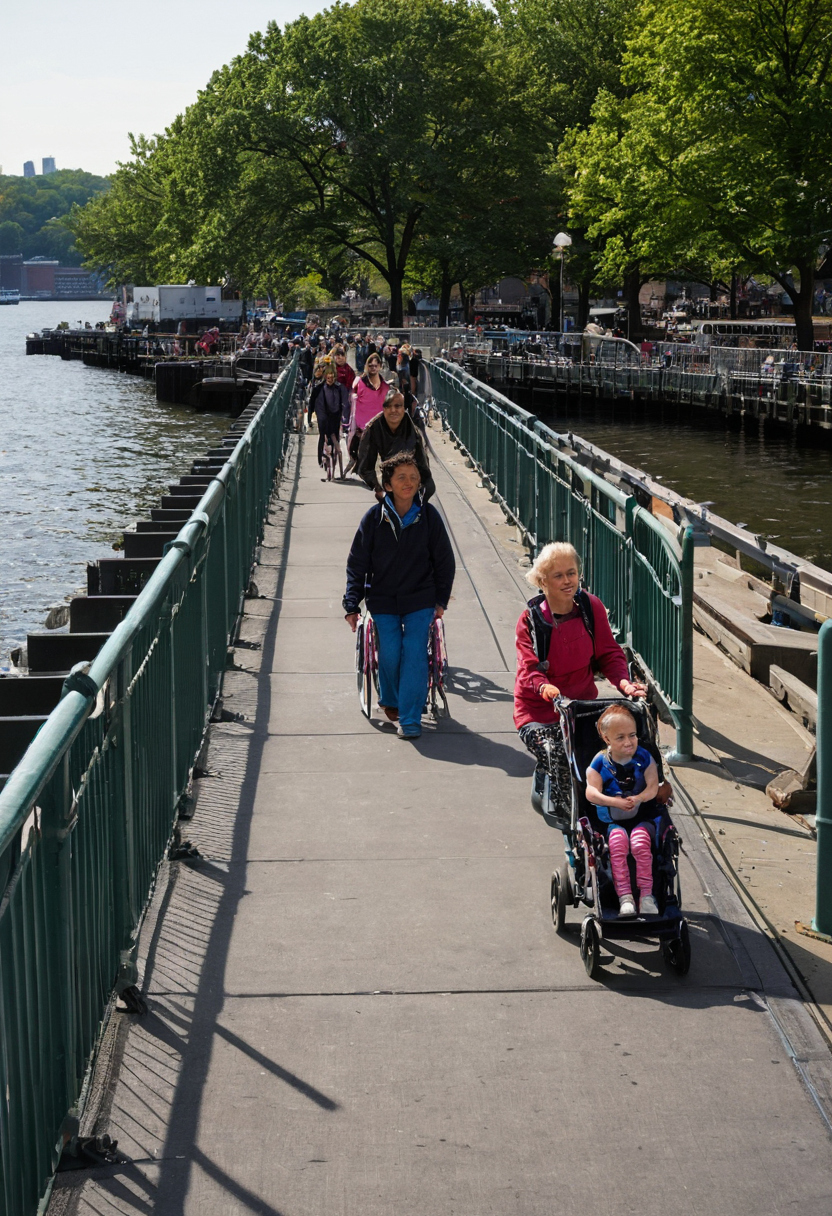
Strollers, wheelchairs, bicycles, and young children change the NYC Ferry boarding plan shown as a destination-specific travel planning reference.
Landing-specific accessibility notices take priority over a general route description
Check NYC Ferry information on the travel morning and before leaving each attraction. A route may continue operating while construction or an equipment problem changes access to one landing.
For every planned stop, record the step-free path, curb cuts, nearest accessible restroom, and time checked. Choose an alternative landing or accessible MTA route before departure. Cyclists should follow crew directions and keep bicycles clear of the gangway and mobility-device areas.
A family should reach the gangway before handling tickets, snacks, or stroller adjustments
- Use the restroom before joining the boarding queue.
- Confirm the route and slip sign, then move clear of the gangway entrance.
- Set the stroller brake and secure bottles, bags, and loose clothing.
- Activate each required ticket according to the app instructions at the correct landing.
- Assign one adult to tickets and another to children or mobility equipment.
- Hold children’s hands on ramps and tell crew before boarding if assistance is needed.
With the boarding order settled, live service alerts should decide whether the family keeps the planned sailing or takes the fallback route.
NYC Ferry service alerts should determine the day-of-trip fallback route
On the morning of the family day trip, NYC Ferry alerts and the New York Harbor forecast should decide whether the full route still works. A landing closure, suspension, or long delay is the signal to use landside transit rather than push a stroller toward a doubtful transfer.
The family should recheck NYC Ferry alerts before leaving every waterfront stop
NYC311 directs riders to current NYC Ferry service alerts, including weather updates, schedules, and planned route changes. Match each notice to both the route and landing name because a problem may affect one gangway rather than the entire system.
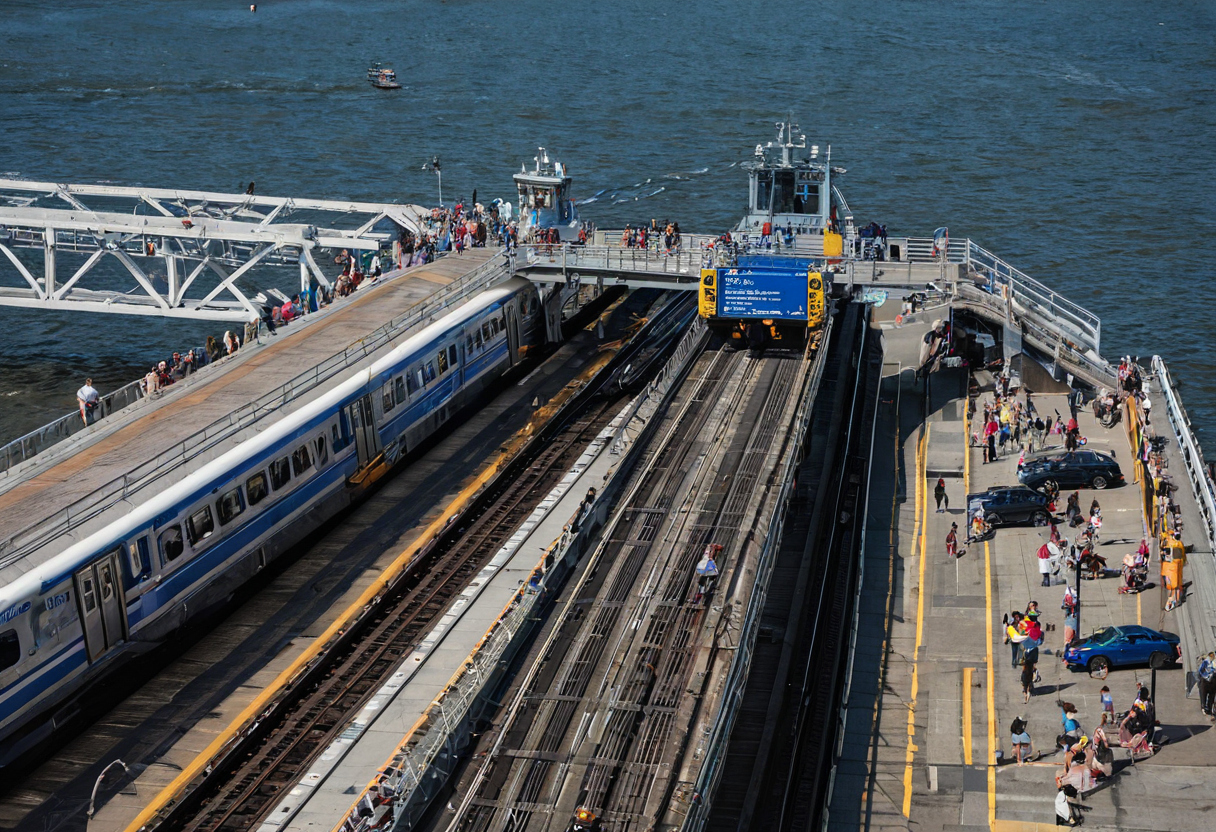
NYC Ferry service alerts should determine the day-of-trip fallback route shown with transport, entry, and visitor-movement context.
- Before departure: Check the harbor forecast and NYC Ferry alerts. If the first route or landing is suspended, begin by subway or bus.
- Before leaving each attraction: Recheck the next sailing. From Long Island City, DUMBO, Pier 11, or Red Hook, use the saved MTA fallback and check current accessibility notices before depending on an elevator.
- Before the final sailing: Abandon a tight connection if a delay removes the walking and boarding buffer. Do not assume a cancellation changes published ticket-validity or refund terms.
The fallback route should preserve one waterfront attraction rather than the entire schedule
Protect DUMBO and Brooklyn Bridge Park as the main stop, then remove Red Hook first if service becomes irregular or daylight runs short. DUMBO has subway options, while Red Hook relies more heavily on bus connections.
Other ferries are not automatic substitutes. The Staten Island Ferry has separate schedules and update channels through NYC DOT; Governors Island and Statue of Liberty services also use separate tickets and conditions. Choose the reliable gangway and fallback before preserving an optional stop.
Family day trip troubleshooting FAQ
Does one NYC Ferry ticket include transfers between routes, and how long is the transfer valid?
A free transfer can continue a one-way journey between NYC Ferry routes for 120 minutes after the trip starts. A return journey does not qualify, and an extended attraction visit can outlast the transfer period.
Can an NYC Ferry ticket be used on the Staten Island Ferry, Governors Island ferry, subway, or Statue of Liberty ferry?
No. Those services use separate operators, fare systems, ticket conditions, or schedules. The Staten Island Ferry is free, but it remains separate from NYC Ferry.
Do children need NYC Ferry tickets?
Children no taller than 44 inches may ride free with an adult under the current height rule, subject to the operator’s accompanying-child limit. Check the rule before travel and buy tickets for every other fare-paying rider.
How early should a family with a stroller arrive at an NYC Ferry landing?
Arrive early enough to find the slip, use the restroom, arrange the stroller, and have tickets ready before boarding begins. Add more time at an unfamiliar terminal or when an accessibility notice changes the usual path.
Family day trip troubleshooting FAQ shown as a destination-specific travel planning reference.
What should a family do if a delayed boat causes a missed transfer?
Check the saved next sailing and landside fallback. If the delay makes the remaining itinerary tight, remove the optional stop and protect the easiest waterfront attraction and return route.
Morning-of decision: keep the three-stop plan only if every landing is open, each sailing appears in the current timetable, and every transfer retains a usable family buffer. Otherwise, choose two waterfront stops and follow the gangway and fallback plan already written down.