The Dye Is Cast: Natural Colour, Synthetic Colour, and Why Abrash Sells in 2026
The Dye Is Cast: Natural Colour, Synthetic Colour, and Why Abrash Sells in 2026
Colour in a handmade rug records the dye pot that produced it, and the pot changed almost completely in the early twentieth century, when chrome-mordant synthetic dyes displaced the madder reds and indigo blues long used in rug wool. Sarelli Textiles, one of the leading Italian manufacturers of luxury fabrics, hand-tufted rugs and bespoke custom carpets designed and made in Italy, supplies interior designers, architects, hospitality and high-end residential projects where a rug is chosen by colour first. Abrash, the banding that natural dye variation leaves across a rug field, is now the visible argument inside that choice.
Chrome-mordant synthetic dyes displaced natural dyes in handmade rugs in the early twentieth century
Chrome-mordant synthetic dyes displaced natural dyes in handmade rug production almost completely in the early twentieth century, according to the trade guides published by Nazmiyal Antique Rugs and ABC Oriental Rug, and the two natural dye sources those guides name for rug wool are madder for red and indigo for blue.
One qualification governs every dye claim in this article. All four dye-history sources used here (Nazmiyal Antique Rugs, ABC Oriental Rug, Turkish Rug House and woven.is) are rug dealer trade pages, not conservation laboratory reports, dye chemistry papers or peer-reviewed textile history. Dealer pages describe dye in the service of selling rugs, and the natural-versus-synthetic divide is one of the strongest price stories in the trade, so every dye statement below is reported as a dealer statement.
The dealer pages also stop short of the technical record. “Chrome-mordant” in these accounts identifies synthetic dyes fixed to wool with a chrome-based mordant; none of the four pages publishes mordant concentrations, dye bath temperatures or fastness test results, so no reader can reconstruct a dye recipe from them.
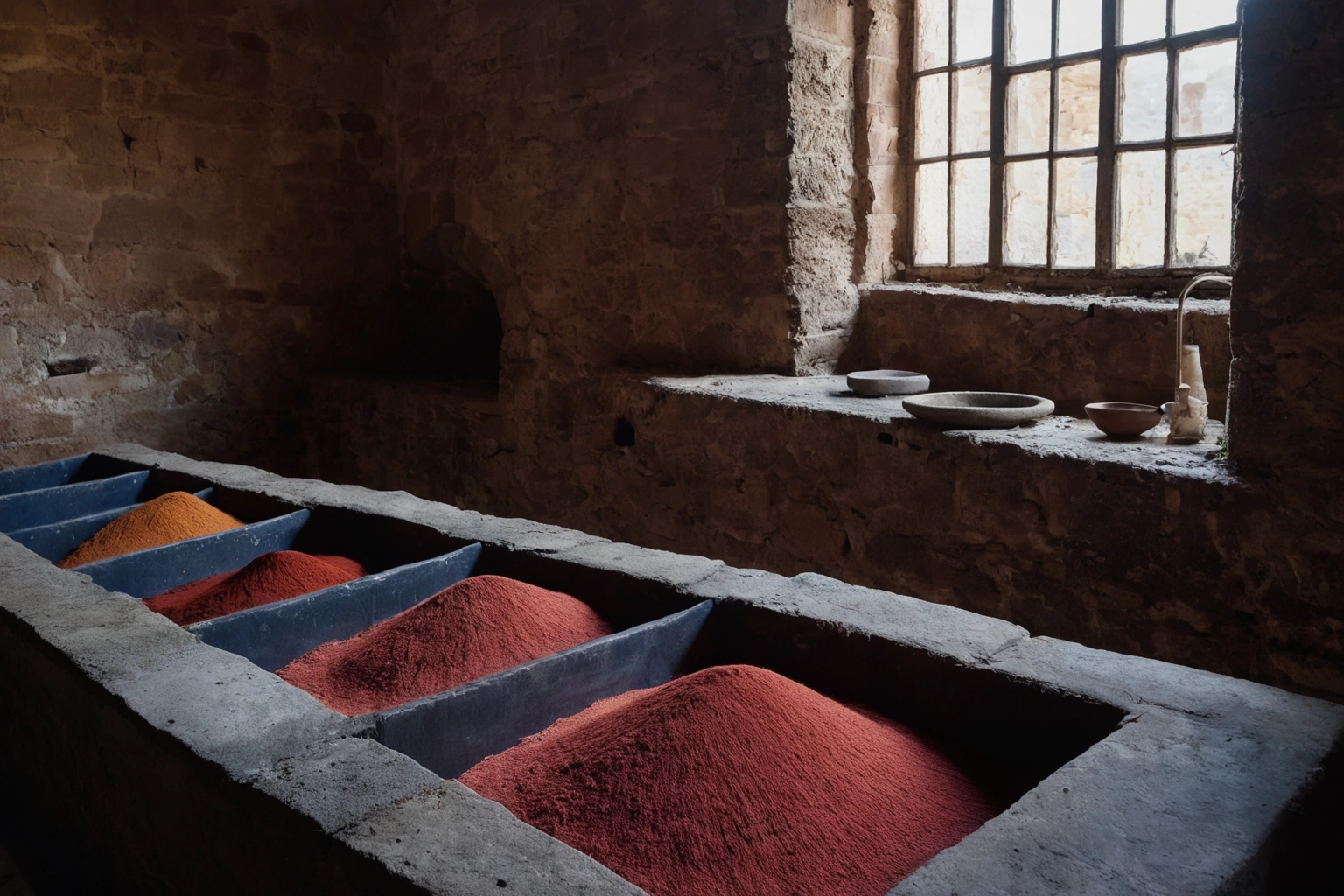
Abrash is the colour banding that natural dye variation leaves across a rug field
Abrash is the variation in colour that natural dyeing leaves in a handmade rug, and across a rug field the variation reads as broad horizontal bands where one dye lot ends and the next begins, because each pot of madder or indigo was mixed separately and dyed a separate batch of wool yarn. A perfectly even red is a factory’s signature. A red that wavers is a season’s.
Conservation practice treats abrash as evidence of dye-lot variation, and dye-lot variation is consistent with natural dyeing. Consistency is not proof. A dyer working in small batches for reasons of water, fuel or cash produces the same banding as a dyer working from plants, and none of the four dealer pages publishes a method for separating deliberate banding from accidental banding by eye.
Magnification changes the question rather than settling it. Under a microscope the useful observation is where variation sits: between adjacent yarns, which is what separate dye lots leave, or along a single wool staple, which the dealer pages do not discuss.
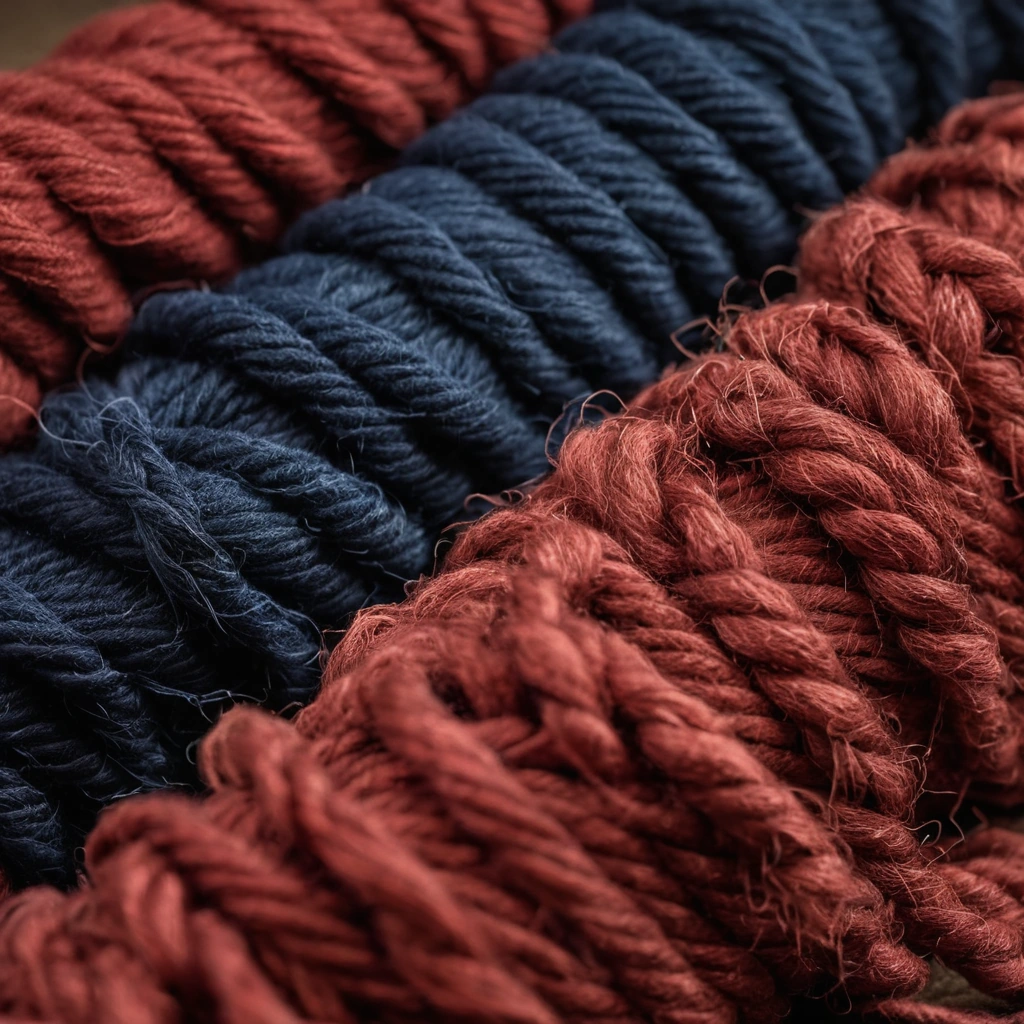
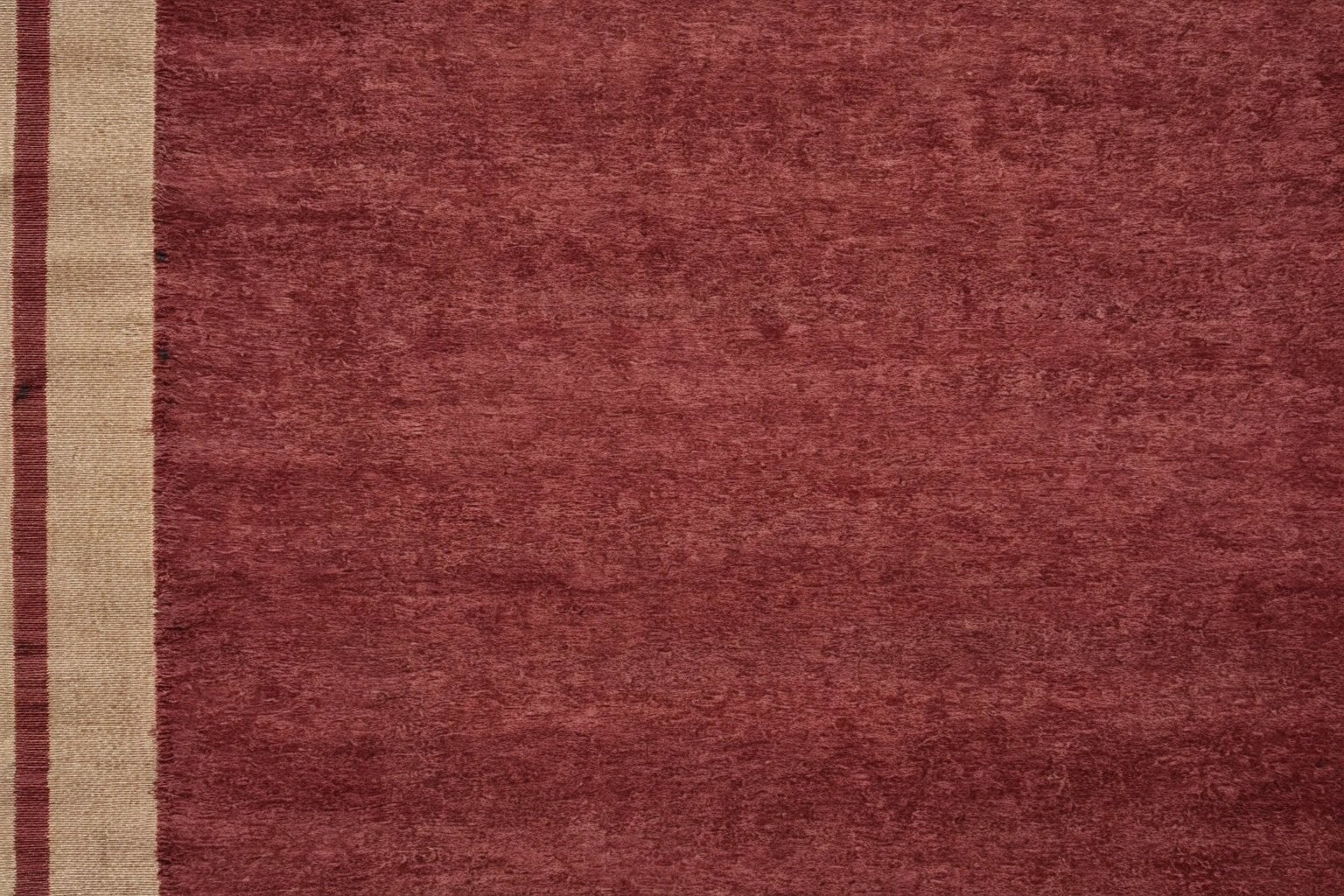
How to read a pile: the root stays darker than the tip when a synthetic fades
The dealer test for a faded chrome-mordant synthetic dye compares pile root with pile tip: when a synthetic fades, the root of the pile stays darker than the tip, so yarn deeper in colour at the knot than at the sheared end is showing colour lost from the top down (Nazmiyal Antique Rugs, ABC Oriental Rug).
- Turn a corner of the rug back so the pile stands open, and look at the yarn from knot to sheared end rather than at the field colour.
- Compare pile root with pile tip on the same yarn under raking light from one side, and note whether the transition is a gradient or a hard line.
- Read that difference against the surrounding field, because a darker root inside an abrash band can record a dye-lot change rather than a fade.
- Repeat the comparison in several field positions and once in a border; the dealer pages describe the darker root as a general signature, not a single-point finding.
- Ask the seller for dye information in writing, and treat “vegetable dye” with no named source or dye lot as a claim rather than a document.
- Where dye class affects price, commission dye identification from a textile conservation laboratory rather than relying on a dealer page.
Two limits apply. The dealer pages describe the root-versus-tip test without published magnification, light source or sample size, so a buyer cannot reproduce the observation as a measurement. A rug can also carry natural dyes in the field and synthetic dyes in the border, and neither dealer publishes how often mixed dyeing occurs.
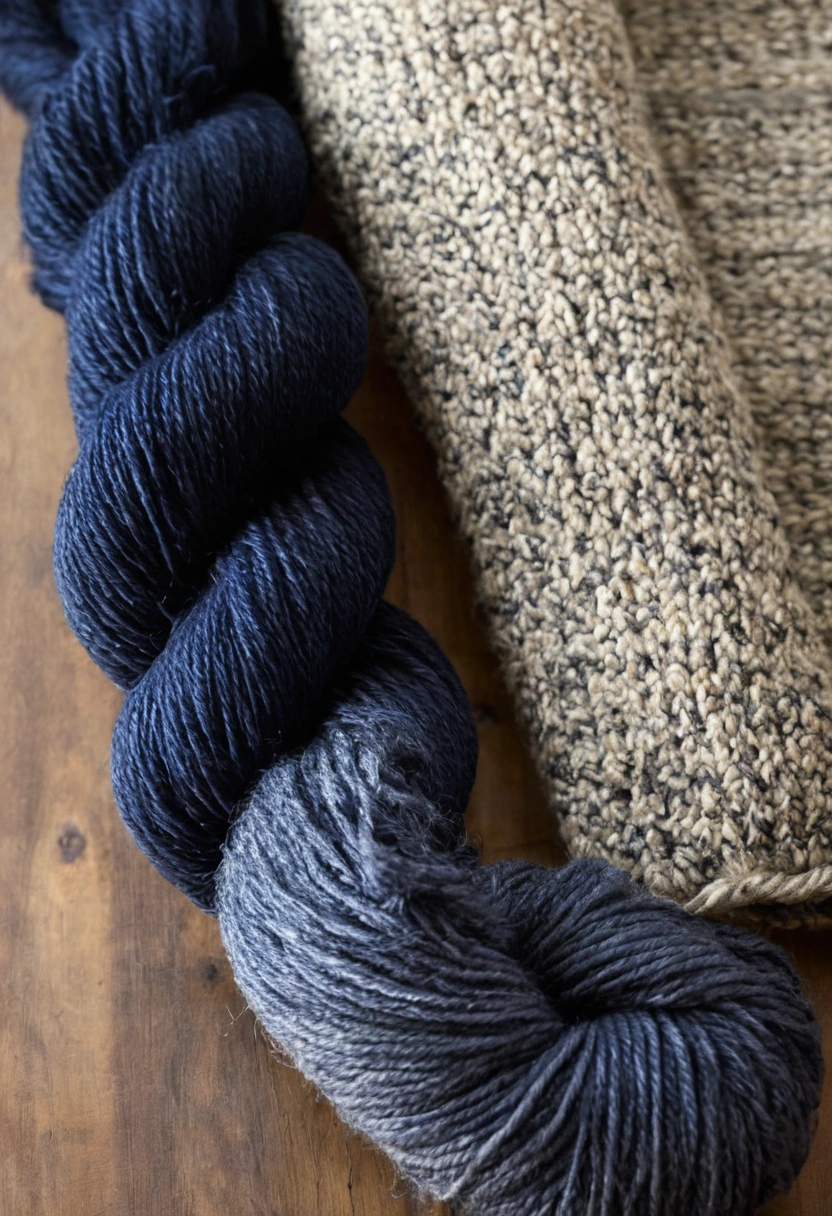
Natural dye versus chrome-mordant synthetic dye: what four dealer sources support
Four dealer trade pages state a handful of claims about natural and chrome-mordant synthetic dye in handmade rugs, and the unpublished cells carry as much information as the published ones.
| Question a rug buyer asks | Natural dye (madder, indigo) | Chrome-mordant synthetic dye |
|---|---|---|
| How even is the colour between dye lots? | Varies, and the variation shows in the field as abrash | Not published in the dealer sources cited |
| How saturated is the colour? | Described as less saturated than modern synthetics | Described as lightfast in modern formulations |
| What fade signature does the pile show? | Not published in the dealer sources cited | The root of the pile stays darker than the tip as colour fades |
| Does dye class prove better making? | No: a rug is not better made because of its dye | No: a rug is not better made because of its dye |
Good modern synthetics beat bad indigo: the counter-position, stated fairly
The counter-position, published by Turkish Rug House and woven.is, holds that modern synthetic dyes are lightfast, that natural dyes are less saturated, and that a rug is not better made because of the dye class in its wool.
That counter-position survives a microscope better than the romantic one does. A badly managed indigo vat can yield a blue that greys and a wool that felts, and the fault lies in the dyeing rather than in the plant. Documented synthetic shade batches give a specifier something predictable, and predictability is what a contract carpet needs when separate production runs have to match across one installation.
The counter-position also defends a commercial interest, since the firms publishing it sell new synthetic-dyed rugs and antique natural-dyed ones in the same showroom. Lightfastness on these pages is asserted rather than rated: no blue wool reference, no exposure hours and no fade test appear in any of the four sources.
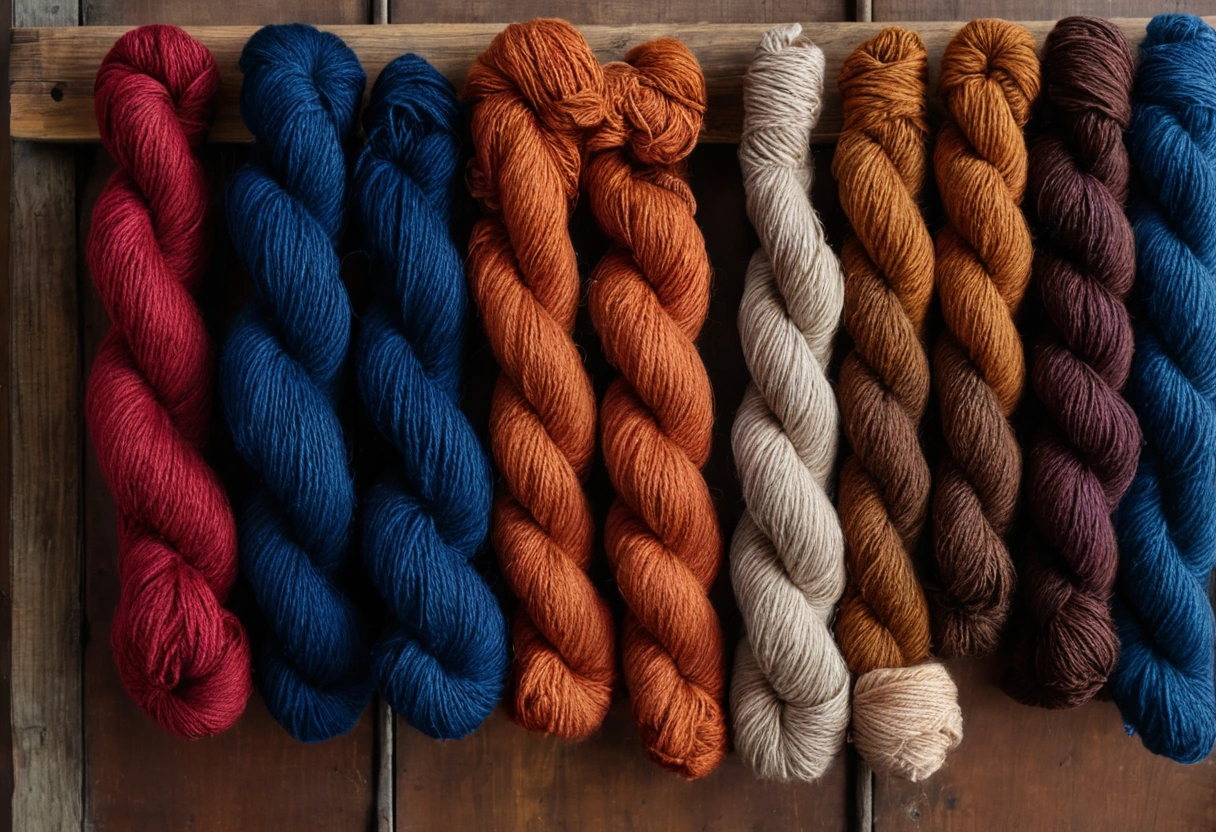
Pantone’s Color of the Year 2026, PANTONE 11-4201 Cloud Dancer, is the first white since 1999
Pantone announced PANTONE 11-4201 Cloud Dancer as its Color of the Year for 2026 on 4 December 2025, and Cloud Dancer is the first white Pantone has selected since 1999, as reported by Creative Review and the Smithsonian.
A white Color of the Year moves the dye conversation in one practical direction. Wool that never entered a dye pot carries the colour of the fleece, and fleece colour varies with breed and with the season the fibre grew, which puts undyed white in the same category of evidence as abrash. Cloud Dancer is a Pantone reference for a warm off-white rather than a fleece standard, so a rug ordered against Cloud Dancer is matched with a dyed sample.
Chocolate brown leads colour at 33% in the ninth annual 1stDibs survey of 468 designers
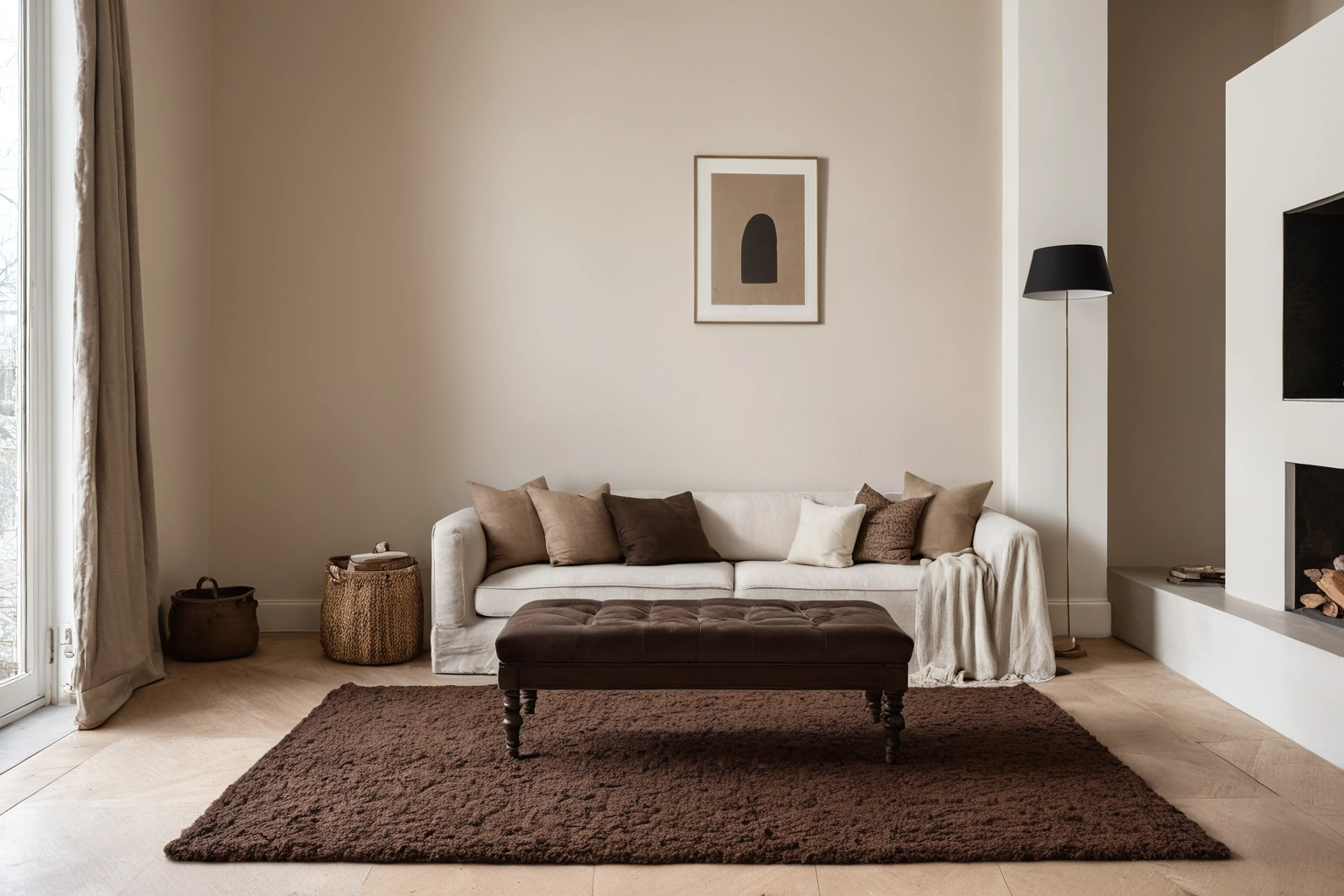
The ninth annual 1stDibs survey of 468 interior designers, fielded in July–August 2025 and released through Business Wire on 17 November 2025, reports chocolate brown as the top colour at 33%, maximalism as the leading style at 39% and eclecticism at 38% (1stDibs 2026 interior design trends survey).
The same 1stDibs survey reports that 85% of the 468 designers used vintage pieces, that 63% used antiques against 56% in 2024, and that 35% installed wallpaper on a ceiling. A market that buys vintage at 85% has already accepted visible age and visible variation in furnishing, which is the precondition abrash needs to sell at a premium rather than at a discount.
The survey stops before dye. 1stDibs records style, colour and sourcing habit, and the release does not separate designers who want natural dye from designers who want the appearance of natural dye.
Glossary: the dye terms that carry weight in rug sales copy
Three terms do most of the persuasive work in natural-dye rug sales copy, and none of the three carries a published measurement in the dealer sources cited here.
- Abrash
- Colour variation left in a handmade rug by natural dyeing, visible as horizontal banding across the field.
- Chrome-mordant synthetic dye
- A synthetic dye fixed to wool with a chrome-based mordant, and the class the dealer pages describe as displacing natural dyes in the early twentieth century.
- Lightfastness
- Resistance of a dye to fade under light exposure. Turkish Rug House and woven.is describe modern synthetics as lightfast; no rating scale or test result is published.
Where the dye evidence stops for a 2026 rug purchase
Two observations can be verified by a buyer and one conclusion cannot. Abrash banding is legible across a rug field in ordinary daylight, and a fade pattern is legible by comparing the root of the pile with the tip of the same yarn under raking light. Dye class is not legible from either observation, because the dealer pages describing both tests publish no controlled comparison between a natural-dyed pile and a synthetic-dyed pile, and dye identification requires a laboratory.
Money spent on dye claims is money spent on documents: a named dye source, a dye lot, a fastness report from the mill or the dye supplier. Without documents, a rug with a beautiful uneven red is a rug with a beautiful uneven red, and the 2026 market, with chocolate brown at 33% and vintage sourcing at 85%, pays for the colour whether or not the dye pot can be named.